A shape that comes from your face
The analysis starts from photographs and the proportions of your face: the smile line, the position of the incisors, the length of the teeth. Your request is noted as you express it.
This assessment leads to a project, first drawn, then placed temporarily on your teeth. A shape that is right for one face can look artificial on another, which is why the design starts from you.
A shade chosen with the neighbouring teeth
When not all the visible teeth are being treated, the veneer has to remain consistent with those around it. This is also why treatment covers what shows when you smile, so that no veneered tooth stands out from its neighbour.
If whitening is indicated, it is done first, to set the reference shade. A gap of two weeks is generally left before bonding. Ceramic does not lighten afterwards.
A ceramic that lets light through
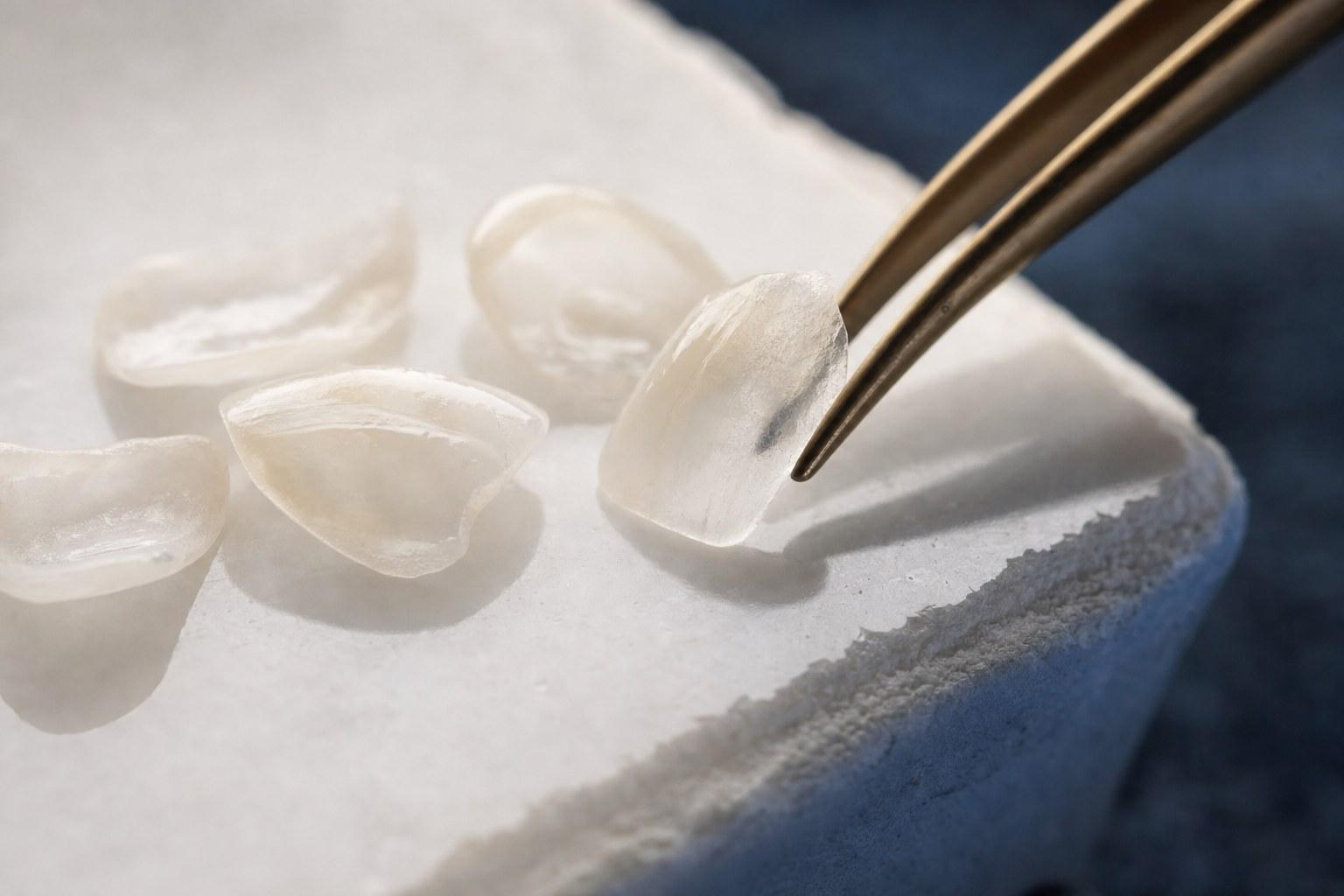
Ceramic reproduces the natural translucency of the tooth. A very opaque veneer is easier to spot, especially in daylight. Thinness therefore matters: roughly 0.3 to 0.7 mm, depending on what needs correcting.
Seeing it before deciding
The project is placed temporarily on your teeth. You look at it, you discuss it, and it is adjusted before any irreversible step. This is the time to say what bothers you: a tooth that is too long, a smile that is too white.
Seeing your smile before deciding: the project and the mock-up
And over time?
Ceramic offers lasting resistance to staining from coffee, tea or tobacco, whereas the neighbouring teeth can change. Follow-up at the practice also helps maintain this harmony.
Related reading: Ceramic veneers · Types of veneers · Clinical cases