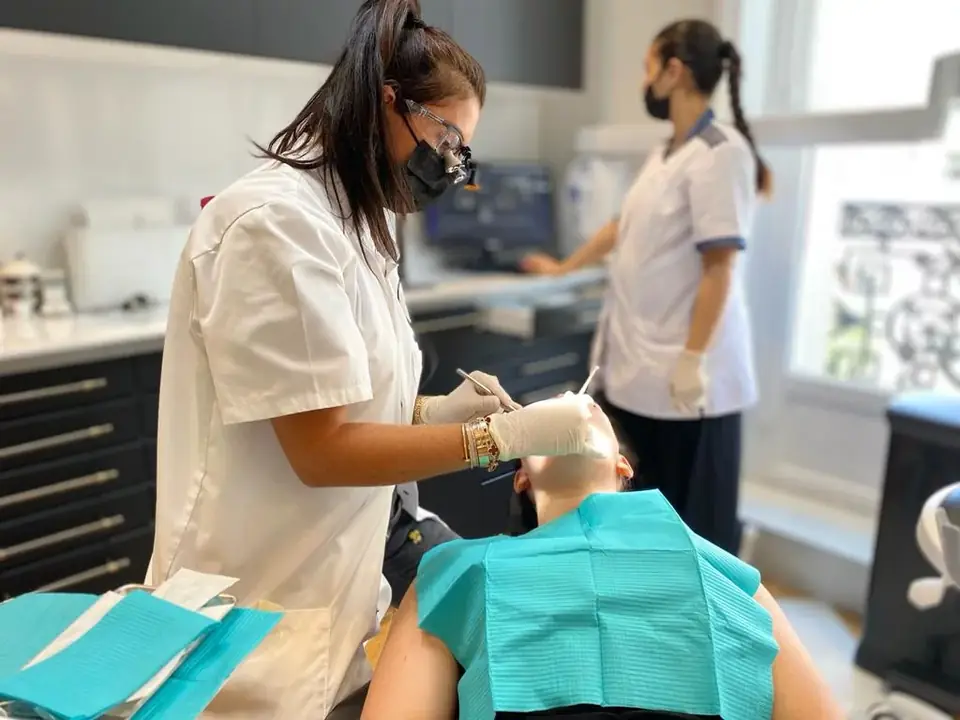
What is a smile makeover?
A smile makeover is a comprehensive approach that restores both the appearance and the function of the teeth, when a single treatment is not enough.
It combines several treatments into a coherent plan: correcting the shade, the shapes and the alignment, but also restoring proper chewing and occlusion. Where a veneer or whitening answers a specific request, a smile makeover rebuilds a worn, damaged or aged smile as a whole — while respecting the balance of the face and the health of the teeth.
When to consider a smile makeover?
It is intended for situations where several teeth are involved, or when the aesthetics and the function need to be addressed together.
- Heavily worn teeth from bruxism, erosion or time.
- Several severely decayed teeth, fractured or missing.
- Old crowns or restorations to be redone, having become unsightly.
- An aged smile: shortened, yellowed teeth, gaps that have appeared.
A smile makeover cannot be built on unstable ground. The assessment in Paris 8 first checks that the foundations are there — the following section sets out which ones — and sequences, where relevant, whatever needs treating first.
A single treatment or an overall project?
The question is not whether a veneer or a crown “would do”: it is whether the problem can be solved tooth by tooth. As soon as the answer is no, the scale changes.
- Compared with a single veneer: the question of the whole. A veneer answers a specific request in the visible region. When several teeth are involved, treating them one after another produces a smile that does not hang together: within a project, the shapes and the shade are decided once, for every piece.
- Compared with a single crown: the question of function. Redoing an isolated crown settles one tooth. If the occlusion has drifted with wear or with missing teeth, the new piece will undergo what its predecessors underwent. A smile makeover reworks the contacts at the same time as the appearance.
- Compared with whitening alone: the question of shape. Whitening works on the shade of the natural teeth and changes neither length, nor shape, nor contacts. On a worn smile it is not enough — but it often precedes the project, in order to set the reference shade.
The threshold is not a number of teeth, it is the point at which function enters the request. When chewing, occlusion or wear form part of the subject, an isolated treatment addresses a symptom.
What needs to be in place before starting
A smile makeover rebuilds; it does not compensate for ground that shifts. The assessment therefore begins by checking what will have to hold beneath the result.
- Healthy gums — untreated periodontal disease destabilises the support of the teeth. The periodontium is treated first: this is the condition that is not negotiable.
- Supporting teeth in good condition — whatever will carry the reconstruction must hold. Where a tooth cannot be preserved, an implant takes over, and it comes before the cosmetic part.
- An occlusion that has been analysed — rebuilding without having understood why the teeth wore down means reproducing that wear on new pieces.
- Bruxism that is managed — if it is not protected by a night guard, it will work on the reconstruction as it worked on the natural teeth.
- Hygiene sustained over time — a smile makeover multiplies the margins between material and gum. Each one calls for careful brushing and regular check-ups.
- Time — the schedule is part of the plan, not one of the constraints discovered along the way. Some stages impose their own order, and healing times cannot be shortened.
None of these conditions is a refusal: they are stages. The assessment in Paris 8 says which are missing, in what order to address them, and from what point the cosmetic part can begin.
The combined treatments
A smile makeover draws on several disciplines of cosmetic and restorative dentistry, chosen according to your situation.
- Ceramic veneers — for the shape, shade and alignment of the visible region.
- Crowns & bridges — to rebuild severely decayed teeth.
- Implants — to replace missing teeth (postgraduate diploma in oral implantology, 2017).
- Composites — for more affordable or transitional restorations.
- Whitening — to set the reference shade beforehand.
The cosmetic project & the mock-up
Nothing irreversible is undertaken before the result has been visualised and approved with you.
From photographs, impressions and an analysis of the proportions of the face, Dr Saal designs a smile project. A mock-up — a model placed temporarily over your teeth — allows the intended shape and volumes to be previewed, adjusted, and the direction approved together before treatment begins.
The analysis is twofold, and that is what separates a smile makeover from a sum of treatments. The aesthetic side reads the proportions of the face, the smile line, the position and length of the incisors, the shade. The functional side reads the occlusion: where the teeth meet, what has worn down, and why. Photographs and impressions serve both. From the cross-reading of these two analyses the project emerges, and then the mock-up that makes it visible in the mouth. Only once that project has been approved by you are the treatment plan, its order and its schedule settled: decide before acting, never the other way round.
The process, step by step
A smile makeover follows a precise sequence, spread out over time: the order of the stages is set during the assessment.
Aesthetic & functional assessment
Analysis of the smile and of the occlusion, photographs, impressions and a study of the contacts. Periodontal treatment to be planned, where relevant.
Design of the project
Shapes, lengths, proportions and shade are designed for the smile as a whole, rather than tooth by tooth.
Approval of the mock-up
Preview of the intended result, adjustments and approval together before any definitive procedure.
Treatment in stages
Sequenced treatments: periodontal treatment and foundations if necessary, then veneers, crowns or implants according to the plan.
Completion & follow-up
Fitting of the definitive elements, adjustment of the occlusion, maintenance advice and regular follow-up over time.
After each stage
A smile makeover does not produce after-effects once, but after each of its stages. They are brief, and they are set out to you beforehand, not afterwards.
- After a preparation or a bonding — passing sensitivity to hot and cold, and a gum that is slightly tender when brushing for a few days.
- After a surgical stage — the instructions and after-effects are detailed to you before the procedure. It is the only point in the process that calls for some organisation.
- Time to get used to the new shapes — the tongue and lips seek out the new volumes over the first few days, then stop noticing them.
- The adjustment of the occlusion — this is the most important of them. A contact that interferes is corrected in a few minutes in the chair, and it is rechecked over time.
What should prompt you to call the practice: pain that sets in rather than easing, a gum that stays swollen or bleeds, a contact that interferes with chewing, a piece that moves, or a night guard that no longer fits. Follow-up is built into the plan: calling between two appointments is not a favour, it is what the plan is for.
Clinical cases
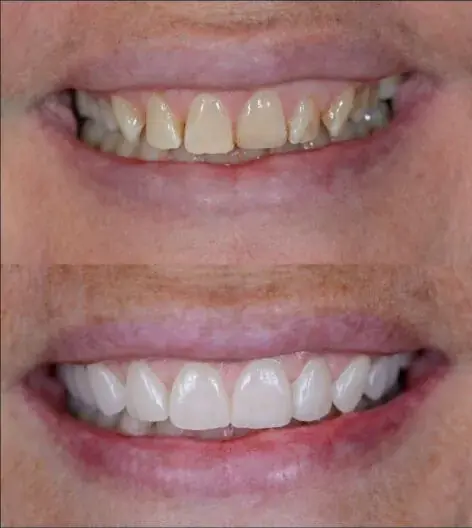
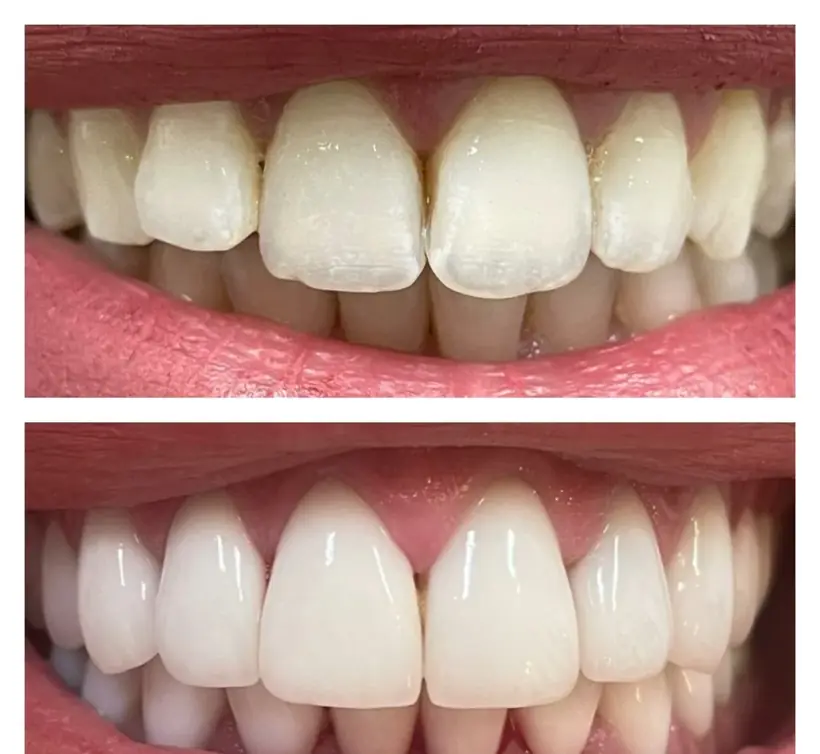
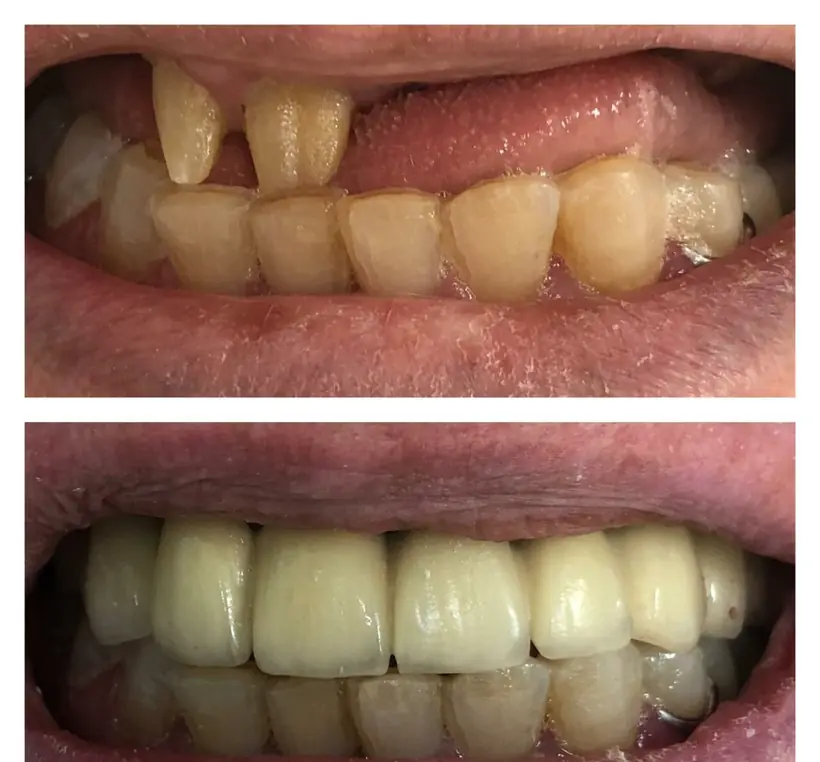
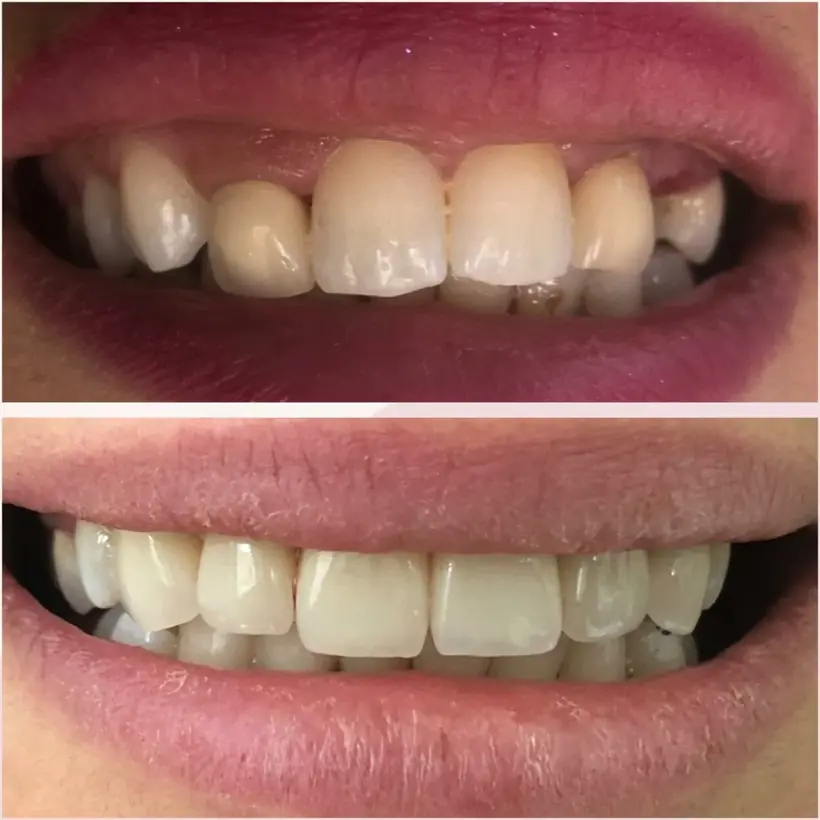
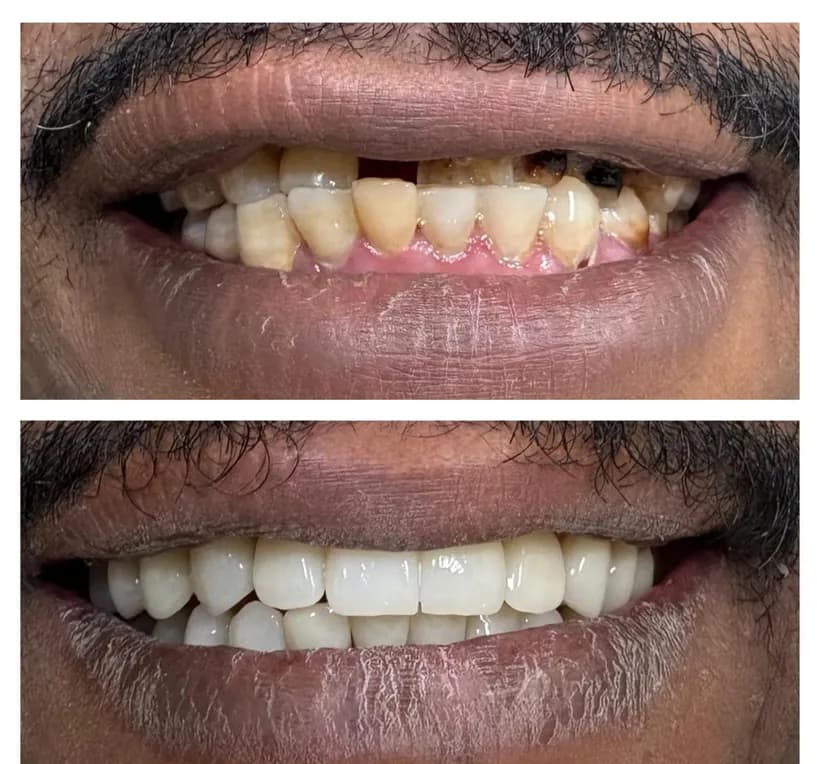
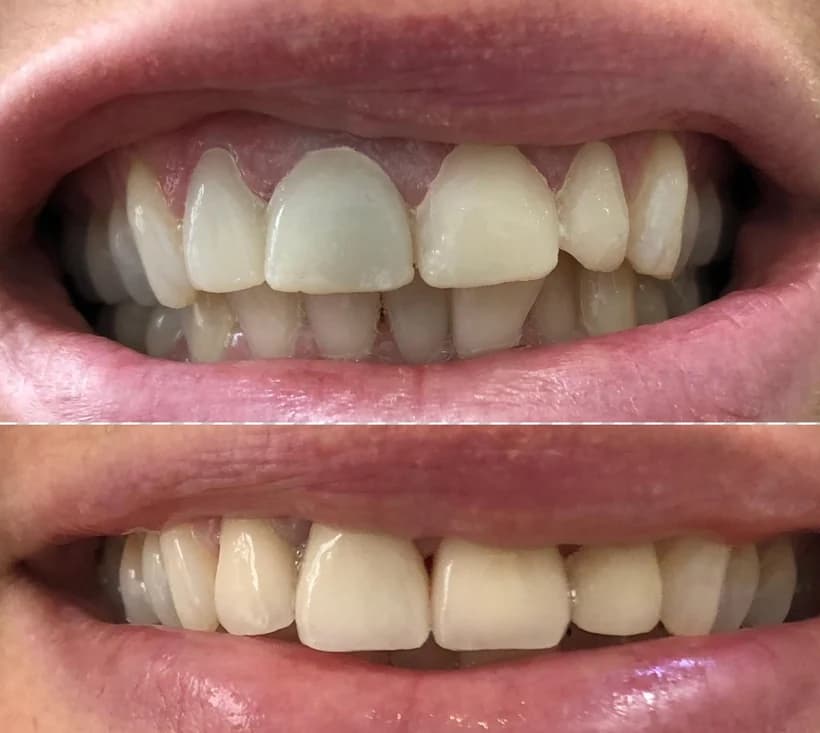
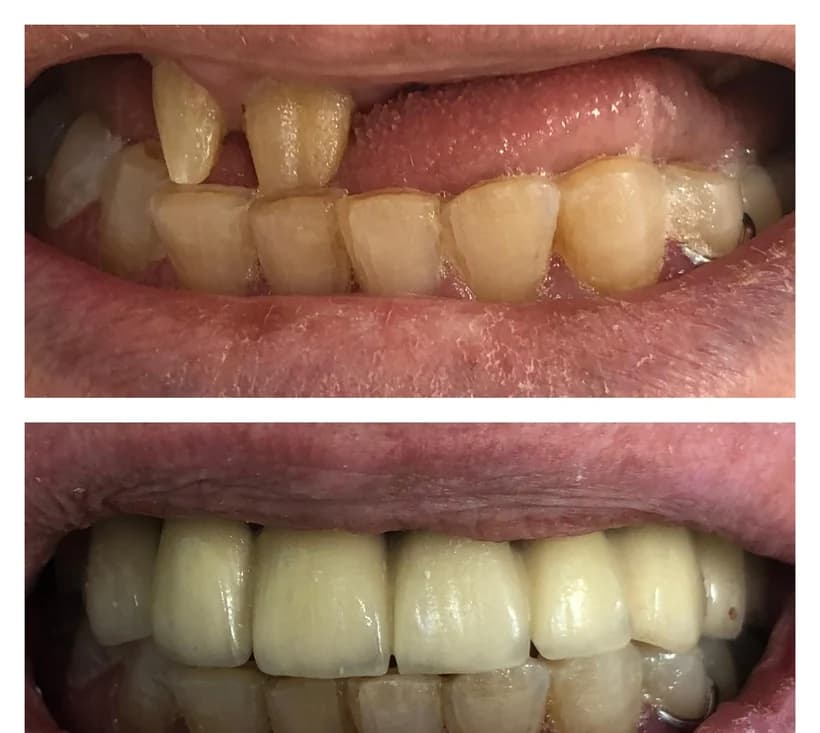
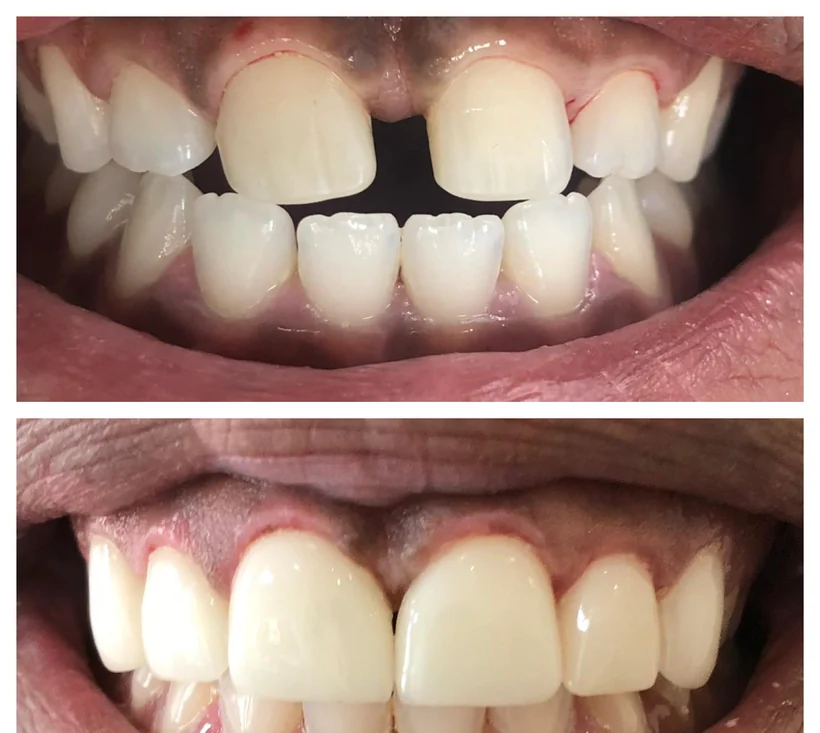
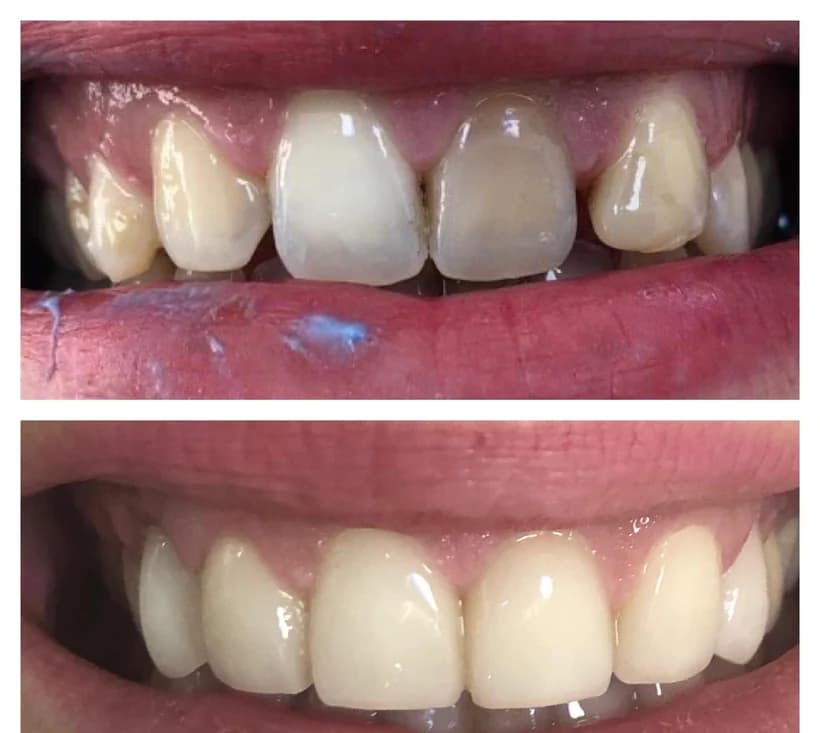
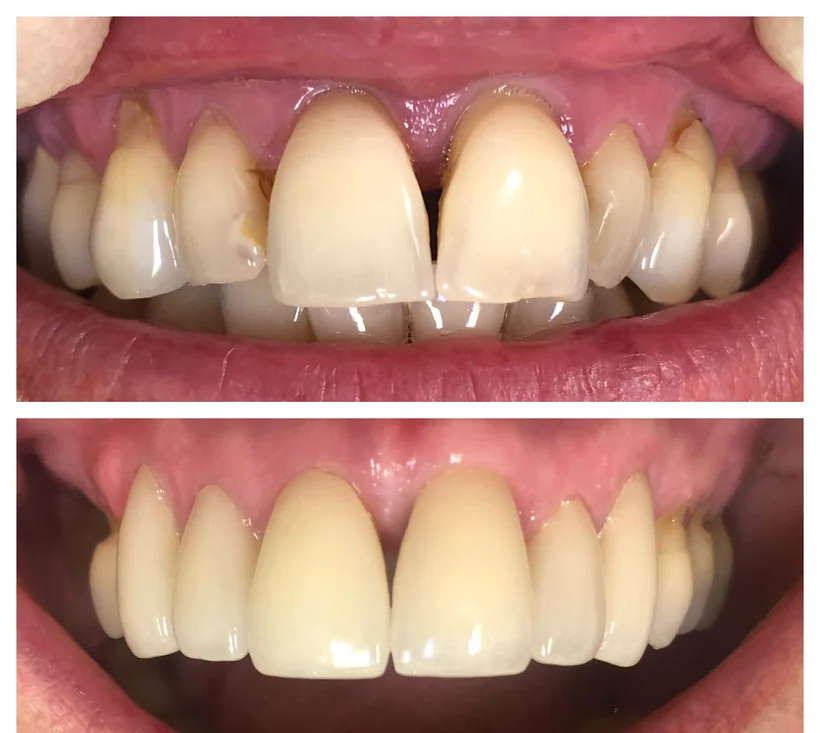
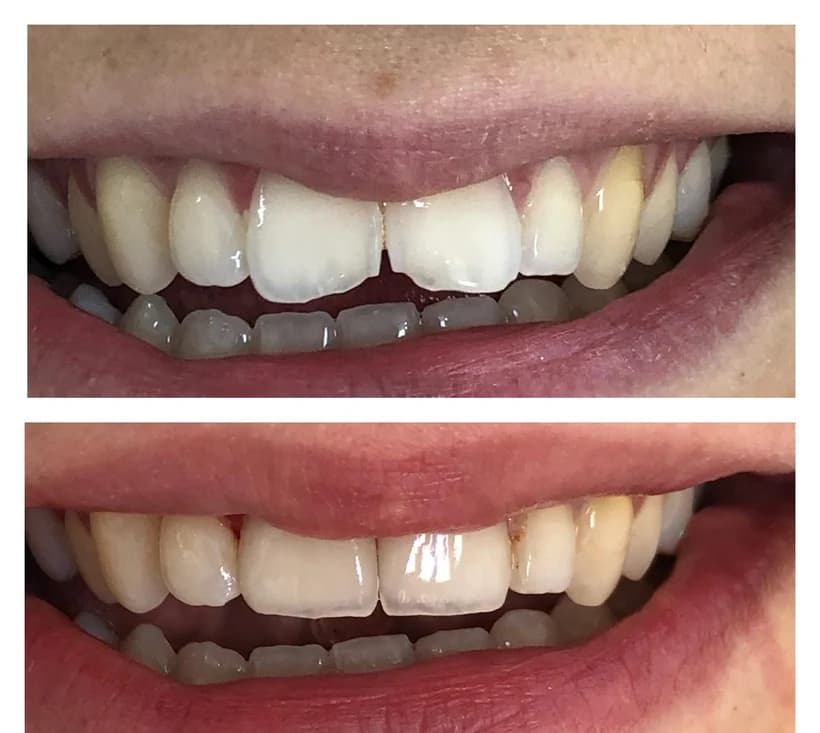
In accordance with our professional code of conduct, these photographs do not represent a guaranteed result: results vary according to each clinical situation.
Longevity & maintenance
Longevity depends on the treatments carried out: ceramic veneers and crowns generally last from 10 to 20 years, implants longer still.
Maintenance relies on careful hygiene, regular check-ups and, in the event of bruxism, wearing a protective night guard. The adjustment of the occlusion, checked over time, is decisive in preserving the result of a smile makeover.
Smile makeover pricing & quotes
The cost of a smile makeover varies considerably according to the number of teeth, the combined treatments and the complexity of the project. Some functional procedures may be partially covered; the cosmetic part is not.
Fees — Dr Laura Zeitoun Saal practice, Paris 8
A written, detailed quote is provided after the first diagnosis appointment, before any treatment.
Your smile makeover in Paris 8, avenue George V
Dr Laura Zeitoun Saal’s practice is located at 45 avenue George V, in the heart of the Triangle d’Or, in the 8th arrondissement of Paris — between the Champs-Élysées and the Seine.
It welcomes patients by appointment, and access is direct from anywhere in Paris: George V station, on line 1, is a few steps from the practice; Alma–Marceau, on line 9, is two streets away. The Champs-Élysées are at the end of the avenue.
A smile makeover is built over several spaced-out appointments: it is a project followed over time, not a visit. The practice accordingly welcomes patients from across Paris and from throughout the Île-de-France, who return as the stages unfold.