Where does the colour come from?
- Age, coffee, tea, red wine and tobacco gradually yellow or dull the teeth.
- Some discolouration is grey or linked to tetracyclines, an antibiotic.
- A non-vital tooth can darken on its own, next to its neighbours.
- White spots are areas of the enamel with a different mineralisation: fluorosis, hypomineralisation, after-effects of braces.
What solutions, and in what order?
The simplest treatment is considered first, if the examination shows that it can give the expected result.
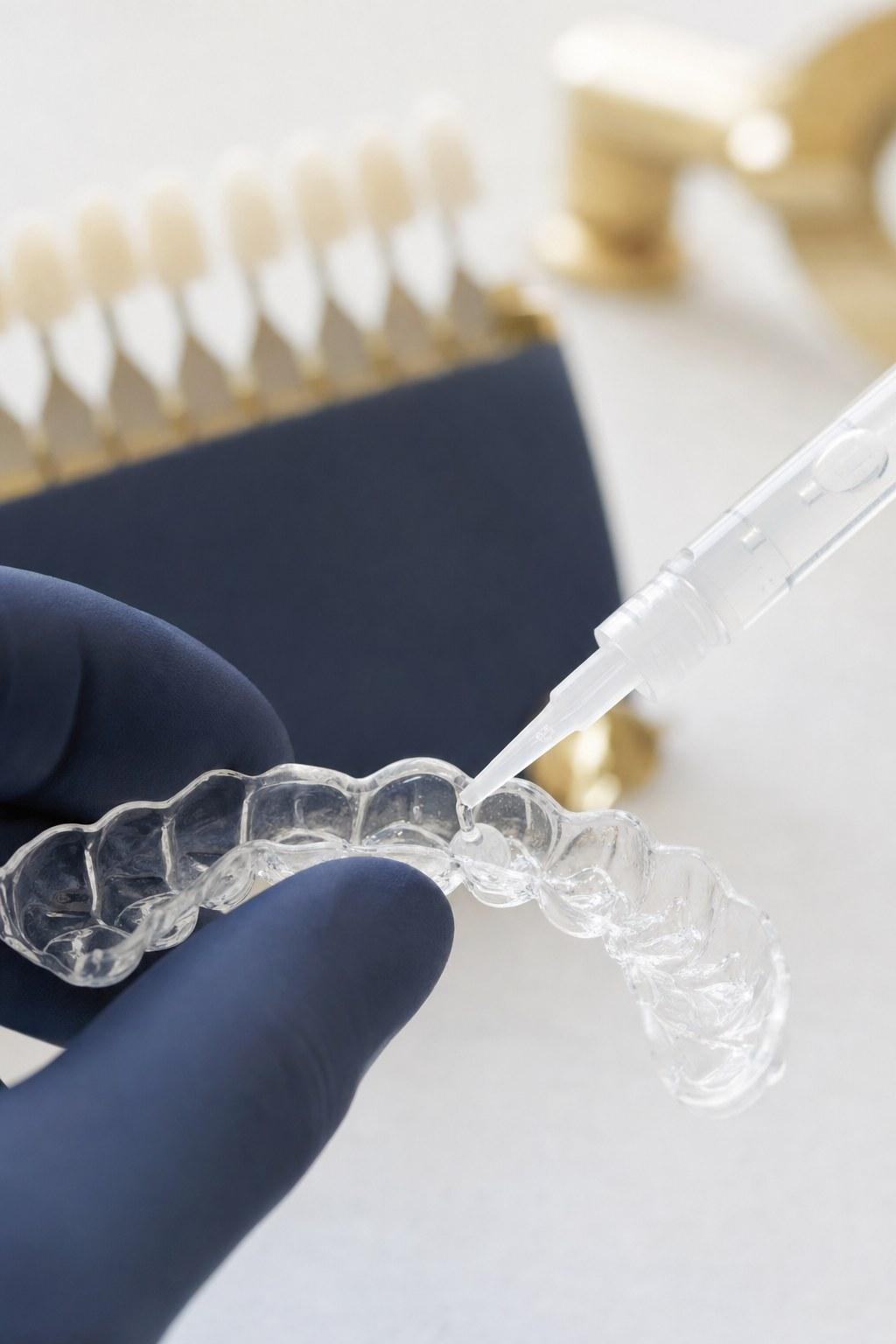
- WhiteningBespoke trays worn at home, with a peroxide-based gel. It acts on the shade of the natural teeth, without removing any tooth structure.
- Resin infiltrationFor white spots. A fluid resin penetrates the porous area and restores its translucency, without trimming the tooth.
- Ceramic veneersWhen the shade resists, on a non-vital tooth or long-standing discolouration. They also change the shape and the proportions.
What whitening will not do
Crowns, veneers and composites do not lighten: on front teeth that have already been restored, the treatment can widen a difference in shade. Grey discolouration or discolouration linked to tetracyclines responds less well, and white spots can stand out temporarily.
Decay or an inflamed gum is treated first. During pregnancy and breastfeeding, the treatment is advised against as a precaution and can be postponed without consequence.
Frequently asked questions
Can a whitening toothpaste be enough?
It acts on the surface, through abrasion. The tooth’s own shade does not change. Whitening works deep within that shade.
Will my teeth turn yellow again?
The result generally lasts 1 to 3 years, depending on hygiene and your habits. Touch-ups with your trays maintain it.
How much does whitening cost?
The complete treatment costs €650 at the practice. It is not covered by the Assurance Maladie.
Related reading: Teeth whitening · White spots · Ceramic veneers